

the blog
welcome to
looking for something specific? find it here
If you are a coach or trainee who thinks that a neutral spine is a must in training, this blog might challenge your view.
Here’s how training with a neutral spine did me wrong…
My name is Annie Miller, certified strength and conditioning specialist, and I help you learn as you train and enjoy your lifts.
Prefer to learn on video? Watch here:
I have to start this blog by saying that this is my experience and my current perspective. Plus, years in the field of strength training as a coach. That’s where I’m coming from as I write this.
If you’ve ever seen a “butt wink” or a “scaredy cat” deadlift, you’ve seen spinal flexion under load…
Now, before you put on your movement elitist pants. Hear me out, because those movement elitist pants are exactly how I got into my situation of how neutral spine did me wrong.
Anytime I have shared my disc herniation story, people flock to it.
That’s probably because depending on your source, 75-80% of Americans experience some level of back pain and typically it’s in your low back or your lumbar spine.
My personal disc herniation was the infamous L4, L5, and S1 combination. Neutral spine is not what caused my disc herniation, but that’s what came after my disc injury.
So today I will share my injury backstory for context as well as the more important piece in my opinion, which is how the recovery process actually led to a lot of learning and undoing regarding the idea of neutral spine.
During the time when I injured my back, I was only squatting about 155 lbs or so in a circuit with biking and push presses or something like that. It was a quick Metcon style lift, which was common for me in my college days. I had 40 minutes in between classes to get a lift in, so I would check crossfit.com and do whatever the wad is for that day.
That was literally my life in this season, and to be honest, at 20 years old, it worked really well for me…
Now, I know I said CrossFit and people will automatically make the correlation that CrossFit hurt my back. That would be false. That is not the case, so please just don’t go there.
Shitty repeated squatting mechanics under load plus a lack of pelvic awareness is what hurt my back.
Essentially, I’d felt tension in my low back during this squatting session. This was common for me at that time and I could tell that it was escalating, but I was 20, so I kept going and then… BAM.
At the bottom of a squat, it was probably my eighth one or so in my third round. It felt like I legitimately got shot in the low back tailbone or what I would imagine getting shot would feel like. I laid on the floor unable to move for minutes, and then dealt with immobility for a good couple of weeks, and when I say immobility, I am not exaggerating.
I was unable to get in and out of my car without pain. Lying down, sitting, and attempting to either flex or extend my low back all hurt. Nothing was comfortable.
So what did I end up doing?
I worked with Dr. Phillip Snell in Portland, Oregon, and I absolutely loved my experience. I found him through my connections at University of Portland. He was on my team. He wanted to understand the injury, why it happened, and help me absolutely recover and get back under the barbell.
In fact, he was one of the first practitioners that introduced the fact that a lot of people have disc herniations in life and they are asymptomatic. Meaning you don’t need surgery and that the body can heal itself most of the time. However, of course, you need to consult your doctor. Surgery is the right option for some people, but it certainly was not for me.
This is where the process begins and how Neutral Spine did me wrong.
I was squatting ass to grass because I was a young strength and conditioning coach and I saw everything in black and white. At that time I thought that Kelly Starrett was God and that we all needed to squat exactly like him… Toes forward, knees out, ass to grass, and as much torque in your glute as you could possibly create.
This injury and my philosophy, to be clear, had nothing to do with Kelly. He never preached that everyone needed to squat like him. That was me. I took his message and skewed it all myself, which is why I made this reel on Instagram:
//www.instagram.com/embed.js
As you can see, I actually did it myself…
This is where people relate every single time I post about injuring my own back.
So Dr. Snell and I determined that I was squatting below my own personal limits, causing my tailbone to tuck under at the bottom of my squat or interspinal flexion, but also I was completely unaware of my pelvis and my breathing.
I worked for 12+ weeks and did the same exact warmup every single day. Plus, I was squatting underneath the bar 3 days per week. I will say this was the most jacked my legs ever got, and I certainly did not hate that part of this process.
Also, here comes the issue with that neutral spine.
I created the most rigid spine you can imagine in this process, and that was my biggest mistake in my recovery. I swung the pendulum from no pelvic control to not being able to move my spine or pelvis from lacking mobility and control to trying to gain mobility, but training rigidly to the max.
While we want to be able to attain and maintain a neutral spine (absolutely) because this is the best or typically the best for force production and limb control. The spine is supposed to be mobile. Yes, you heard that right?
Your spine should be mobile.
It should be able to flex and extend and rotate in all three sections. With that, you should be able to segment your vertebrae moving one at a time.
I’m not saying that this is a common ability or that it’s easy to attain if you can’t do it, but the spine should have these abilities. It was made to have these abilities. Now, should you attempt this under load? Not always, but if progressive, then perhaps, yes, it’s totally safe.
Contrary to Globo gym beliefs, pulling a deadlift with a rounded spine does not inherently lead to injury. We simply do not have the data to support that claim that many people have.
Now, I’m going to calm down if this makes you rage inside. What we do know is that when load exceeds capacity, no matter the position, no matter the exercise, we often end up with injury or tissue damage.
So yes, if you have not trained and progressed load over time in that rounded position, you may get injured due to the excess load in an untrained position in which you lack the capacity to perform.
And that does mean that if I trained my end range of a squat where I did have that slight spinal flexion in place, but I remained braced, I would likely be fine and injury free.
That was not my case. Controlled, I was not.
Now, don’t get me wrong, neutral spine is great. As I said, we want to be able to find and sustain it. That’s an important part of training, but also we need spine mobility and to remember that neutral spine is a buffer zone.
Some give in either direction, flexion or extension is not going to automatically equal injury.
In Conclusion:
Don’t become a movement elitist like I was. Train the core in different positions, and strengthen the low back as well. It should be strong. You should not be afraid of working those muscles and be open to working on control through your spinal end ranges. Just as you would with your hips, your ankles, your shoulders, any other joint in the body.
That’s not to say disregard all form, and that we should completely ignore the most efficient movement pattern for force transfer. That is not what I’m saying. Let’s just not get so fixated on always being in a neutral position that we lose all mobility and live in fear of any spinal flexion.
That is my point.
Take it or leave it.
Join The Discussion:
Let me know in the comments below. Have you experienced a disc herniation? How did it happen? What did you do to recover from it? Hopefully, this blog was insightful.
If anything, remember that this is just my experience and my perspective, but I do hope you got something from it.
I hope you enjoyed these educated gains and I will see you in the next blog.

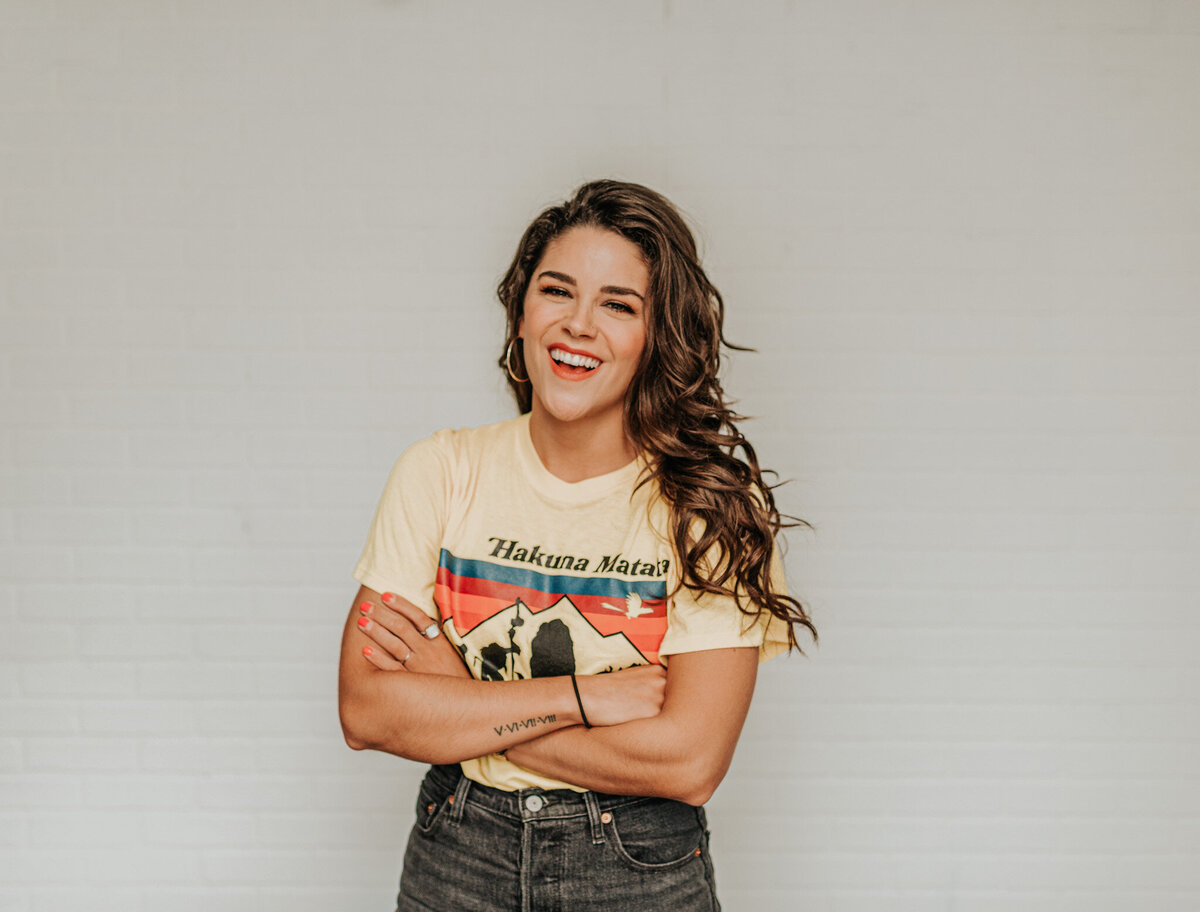
I'm an adventurous introvert from Vancouver, Washington who lives on sleep + "me time." I'm a lover of lifting weights, dinosaurs, real talk and traveling with my husband. I am here to help you move better, lift more, bust the myths of the fitness industry, and inspire you to love the process.
Hey you,
The name's Annie & you're reading my thoughts. Let's get acquainted.
the whole story >









looking for something specific? find it here
THE LINKS BELOW ARE AFFILIATE LINKS
SKIN CARE
Nutrition
brands I love
working against gravity
Fre skin care
favorites
blue light blockers

klassy network
code: fdba saves you 15% off
online TRAINERS
save $50
code: ANNIE saves you 20% off
You love my style, trust my reviews, and want more Annie Miller Concepts vibes in your life? Shop my favorite brands. You get awesome products and yours truly gets a little kick-back.
supplements

code annie
free flexy gains
3 Day Mobility + Core
free download
free biz gains